≥99.0%
€75
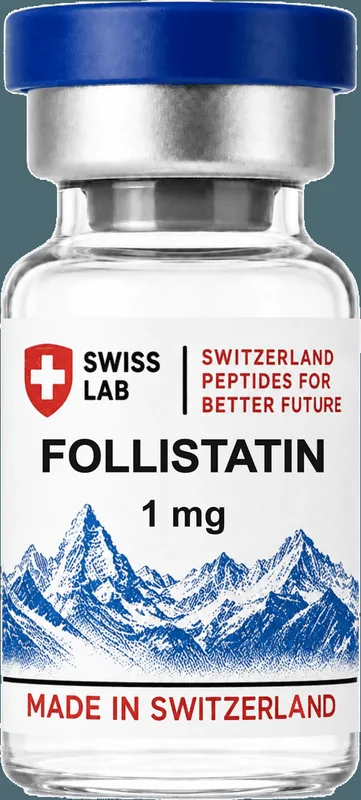
Follistatin-344 is a recombinant single-chain autocrine binding protein that neutralizes Activin and Myostatin (GDF-8), widely used as a reference antagonist in skeletal myogenesis and TGF-β signaling models.
Follistatin-344 is a recombinant single-chain autocrine binding protein that neutralizes Activin and Myostatin (GDF-8), widely used as a reference antagonist in skeletal myogenesis and TGF-β signaling models.
Analytical release verification for current Follistatin (1 mg) inventory
| Batch Lot # | Release Date | Analytical Method | Purity Spec | Endotoxin (LAL) | Moisture |
|---|---|---|---|---|---|
| SL-2026-122 | 2026-10-28 | SEC-HPLC + SDS-PAGE (Reducing & Non-Reducing) | ≥99.0% (Monomeric Purity) | <0.5 EU/mg | <2.8% (Karl Fischer) |
Pre-reconstitute gently in sterile 0.6% Acetic Acid or neutral sterile water with 0.1% BSA carrier; never vortex
Store lyophilized protein at -20°C to -80°C; aliquot reconstituted solution at -20°C and avoid repeated freeze-thaw.
At ~34.8 kDa (non-glycosylated core), recombinant proteins like Follistatin possess tertiary and quaternary folding structures that denature under harsh reversed-phase organic gradients. Size-exclusion chromatography (SEC-HPLC) and SDS-PAGE verify monomeric integrity and detect dimers or aggregates.
Avoid vigorous vortexing, foaming, or repeated freeze-thaw cycles. Slowly introduce buffer along the borosilicate vial wall and consider low-protein-binding polypropylene tubes (or carrier protein buffer where assay-compatible) for nanomolar working dilutions.
Follistatin (CAS 117628-82-7) targets Activin A/B & Myostatin (GDF-8) extracellular antagonist (Lyophilized sterile Tris/NaCl buffer cake). Reference publication: Lee S.J. et al., Mol Endocrinol (2010) — Regulation of muscle mass by follistatin and activins (PMID: 20810712).
Peer-reviewed mechanism summaries and analytical protocols
A deep dive into somatotropic axis stimulation. Comparing GHRH receptor binding, DAC modification kinetics, ghrelin/GHS-R1a agonism, and pulsatile growth hormone secretion.
A comparative map of the HPG axis: GnRH receptor agonism (Gonadorelin), LH receptor mimetics (HCG), combined FSH/LH activity (HMG), and upstream GPR54 activation (Kisspeptin-10).
A deep analysis of authentic 191-amino acid Somatropin vs 192-amino acid Somatrem. Size-exclusion chromatography (SEC), deamidation artifacts, and mass confirmation.
0 items selected • Min. order €220
Your cart is empty
Browse our catalog of research peptides and reagents (minimum order €220).