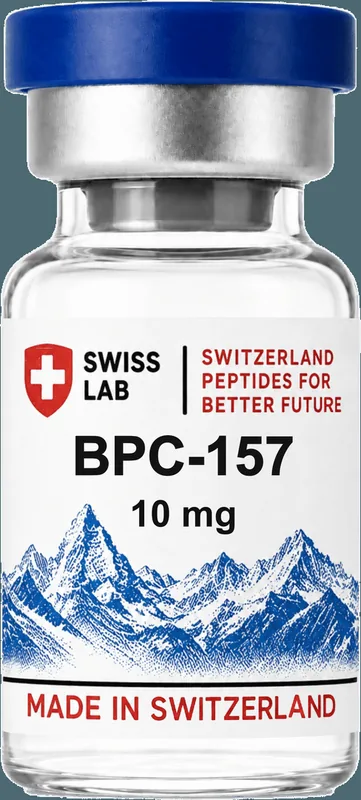
GHK-Cu: Biochemistry of the Gly-His-Lys Copper Complex in Gene Expression and Tissue Remodeling
A biochemical review of the human tripeptide copper complex GHK-Cu. Epigenetic gene resetting, metalloproteinase modulation, collagen/elastin synthesis, and analytical HPLC verification. GHK-Cu is a naturally occurring tripeptide (glycyl-L-histidyl-L-lysine) with exceptionally high affinity for copper(II) ions (log K = 16.4).
- GHK-Cu is a naturally occurring tripeptide (glycyl-L-histidyl-L-lysine) with exceptionally high affinity for copper(II) ions (log K = 16.4).
- Broad gene profiling shows GHK modulates the expression of over 4,000 human genes, upregulating antioxidant and DNA repair pathways.
- Stimulates decorin, collagen type I and III, and elastin synthesis while balancing MMP-1 and TIMP-1 levels.
- Displays an intense, characteristic blue color in aqueous solution due to d-d electron transition of the Cu2+ coordination complex.
- Batch purity must be confirmed by reverse-phase HPLC and ICP-MS (inductively coupled plasma mass spectrometry) to verify 1:1 copper stoichiometry.
| CAS Registry Number | 49557-75-7 |
|---|---|
| Molecular Formula | C14H24CuN6O4 |
| Molecular Mass | 403.93 g/mol |
| Primary Biological Target | Extracellular Matrix Receptors & Gene Transcription (Broad) |
| Analytical Purity Standard | ≥99.0% (RP-HPLC, C18, 214/220 nm) |
| Identity Verification | ESI-MS (±0.1 Da) + Karl Fischer Moisture (<3.0%) |
| Lyophilized Storage | -20°C desiccated, protected from UV light (24–36 months) |
| Reconstituted Storage | 2°C–8°C refrigerated (up to 28 days in 0.9% BA BAC water) |
1. Coordination Chemistry of the GHK-Copper Complex
GHK (Gly-L-His-L-Lys) binds divalent copper (Cu2+) with sub-picomolar affinity. In the square planar coordination complex, the Cu2+ ion is chelated by four nitrogen atoms: the amino nitrogen of glycine, the two deprotonated amide nitrogens of the peptide backbone, and the imidazole nitrogen of the histidine residue. This precise chelation geometry prevents free copper from generating damaging Fenton-type reactive oxygen species (ROS).
2. Epigenetic and Transcriptomic Modulation
Broad-scale transcriptomic analyses using the Broad Institute's Connectivity Map have demonstrated that GHK-Cu significantly alters the expression of more than 4,000 human genes. GHK-Cu upregulates DNA repair genes, trophic factor expression (bFGF, VEGF, NGF), and antioxidant enzymes while downregulating pro-inflammatory markers (such as IL-6, TNF-α, and TGF-β1).
3. Extracellular Matrix (ECM) Synthesis and Remodeling
In dermal fibroblast and keratinocyte cultures, GHK-Cu enhances the production of collagen, elastin, proteoglycans (decorin, dermatan sulfate), and glycosaminoglycans. Crucially, it does not induce unconstrained fibrosis: GHK-Cu increases matrix metalloproteinases (MMP-2) while simultaneously elevating tissue inhibitors of metalloproteinases (TIMP-1 and TIMP-2), facilitating balanced tissue reconstruction.
4. Solution Handling and Colorimetric Confirmation
Authentic GHK-Cu lyophilized powder is distinctly blue or light cyan. Reconstitution with sterile bacteriostatic water yields a clear, vivid blue solution. If the solution appears colorless or cloudy, copper chelation is incomplete. Store reconstituted solutions at 2°C to 8°C away from strong chelating agents such as EDTA or ascorbic acid.
5. Bench Preparation & Assay Reproducibility for GHK-Cu
When designing in-vitro experiments targeting Extracellular Matrix Receptors & Gene Transcription (Broad), normalize dosing across replicates by molar concentration (µM or nM) using the published molecular weight (403.93 g/mol) and batch counterion composition rather than gross powder weight alone. Log lot numbers, diluent pH, and aliquot dates to ensure batch-to-batch reproducibility across longitudinal experiments.
Peer-Reviewed References & Analytical Standards
- Pickart L. & Margolina A. (2018). Regenerative and protective actions of the GHK-Cu peptide in the light of the new gene data. International Journal of Molecular Sciences, 19(7), 1987. [PMID: 29986520 ↗]
- Pickart L., Vasquez-Soltero J.M., Margolina A. (2015). GHK peptide as a natural modulator of multiple cellular pathways in skin regeneration. BioMed Research International, 2015, 648108. [PMID: 26236730 ↗]
Referenced Laboratory Research Reagents
Batch-verified SwissLab catalog entries cited in this monograph
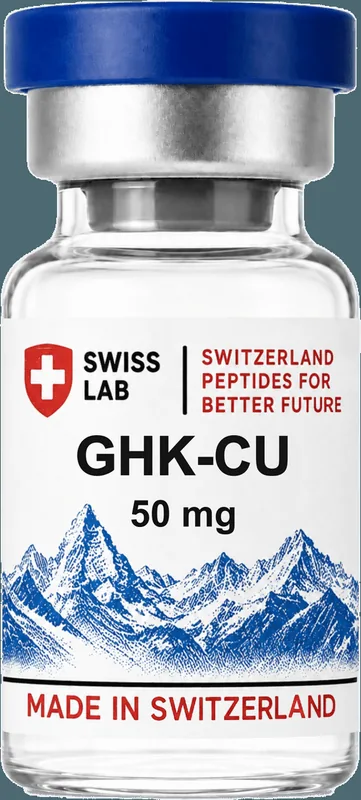
All analytical monographs and chemical data are published strictly for in-vitro laboratory research and scientific reference. Reagents must be handled by qualified personnel wearing appropriate PPE. Not for human or veterinary use.