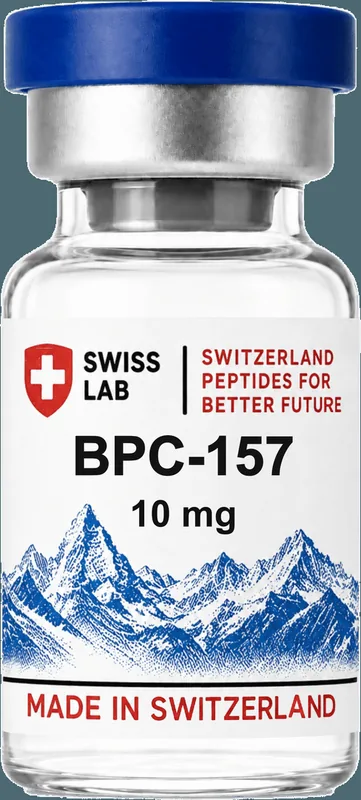
How to Verify a Peptide COA (2026): RP-HPLC Purity vs. ESI-MS Identity, Quantitative Fill & Fake Report Red Flags
A valid peptide Certificate of Analysis (COA) must independently prove three distinct metrics for the exact lot code printed on your vial: chromatographic purity (RP-HPLC UV 214/220 nm, ≥99.0% for synthetic peptides or SEC-HPLC for proteins), molecular mass identity (ESI-MS within ±0.1 Da), and quantitative Net Peptide Content (accounting for acetate/TFA counterions and Karl Fischer moisture). Purity percentage alone never confirms sequence identity or actual vial milligram fill.
- Chromatographic purity (RP-HPLC area %) only measures UV-absorbing peak ratio—it cannot prove the peptide sequence is correct without accompanying ESI-MS or MALDI-TOF mass confirmation.
- A 99.2% pure lyophilized cake still typically contains 70%–85% Net Peptide Content (NPC) due to bound acetate/TFA counterions and <3.0% residual moisture.
- Always match the physical vial lot code and test date to the vendor's active Batch COA Registry; undated or cropped certificates are primary red flags for recycled reports.
- Independent third-party test portals (such as ISO/IEC 17025 laboratories or Janoshik Analytical verification keys) must resolve directly on the testing laboratory's own domain.
| Chromatographic Purity (Peptides) | RP-HPLC (C18, UV 214/220 nm, ≥99.0% main peak area) |
|---|---|
| Protein Monomeric Integrity | SEC-HPLC & reducing/non-reducing SDS-PAGE (≥98.0% monomer) |
| Molecular Identity Confirmation | ESI-MS or MALDI-TOF (±0.1 Da monoisotopic mass match) |
| Quantitative Assay / NPC | Elemental Nitrogen (CHN) or AAA — typically 70%–85% active peptide |
| Endotoxin & Moisture Release | LAL USP <85> (<0.5 EU/mg) & Karl Fischer titration (<3.0% H2O) |
1. Why RP-HPLC Purity Alone Does Not Prove Peptide Identity or Milligram Fill
One of the most frequent analytical misconceptions in European peptide procurement is treating a single "≥99% HPLC" badge as complete proof of quality. Reverse-Phase High-Performance Liquid Chromatography (RP-HPLC) separates components by hydrophobicity and integrates UV absorbance at 214 nm or 220 nm—meaning a 99.3% peak only confirms that one UV-absorbing compound dominates the sample. Without Electrospray Ionization Mass Spectrometry (ESI-MS) confirming the exact monoisotopic mass (for example, 1419.53 Da for BPC-157 or 4731.33 Da for Retatrutide), RP-HPLC cannot rule out a mislabeled compound or deletion sequence. Equally important, area-percent purity does not measure absolute vial fill weight; quantitative HPLC against a certified reference standard or elemental CHN analysis is required to verify Net Peptide Content.
2. Matching Modality to Analytical Method (Peptides vs. Proteins vs. Blends)
Experienced QC chemists immediately spot fabricated or low-rigor COAs when a supplier cites the wrong analytical instrument for a compound class. Linear and cyclic synthetic peptides under 6 kDa (BPC-157, Tirzepatide, Epitalon, MOTS-c) require C18 RP-HPLC and ESI-MS. Co-lyophilized multi-peptide blends such as GLOW or KLOW cannot be evaluated as a single peak—they require gradient RP-HPLC capable of resolving each constituent peptide individually. Folded recombinant proteins (rhGH 191-aa, IGF-1 LR3, Follistatin, ACE-031, hCG) denature on aggressive organic RP-HPLC gradients and must be qualified via Size-Exclusion Chromatography (SEC-HPLC) and SDS-PAGE to detect dimers and aggregates.
3. Detecting Recycled, Cropped, or Manipulated Certificates of Analysis
Across independent research forums and quality audits in 2025–2026, four COA failure modes recur consistently: (1) static PDFs with removed lot numbers or dates older than 12 months recycled across new production runs; (2) cropped third-party test screenshots missing unique report IDs or verification keys; (3) impossible "100.0% purity" claims lacking baseline chromatogram integration tables; and (4) missing counterion disclosure (leaving toxic trifluoroacetate salts unflagged for primary cell culture). Before trusting any third-party Certificate of Analysis, confirm that the lot code on your vial matches the live Batch COA Registry and—where third-party verification is cited—confirm the report hash directly on the external testing laboratory's official domain.
4. Factoring Counterions, Karl Fischer Moisture & LAL Endotoxin Into Assay Design
Even when RP-HPLC purity exceeds 99.0%, lyophilized peptide cakes inevitably contain counterion salts (acetate or TFA) bound to basic residues (Lys, Arg, His) plus 1%–3% residual bound water verified by Karl Fischer titration. For cell-based and receptor-binding experiments, apply batch Net Peptide Content inside a molarity calculator so working micromolar (µM) dilutions reflect true active peptide mass. For cellular or in-vitro immunological assays, additionally verify USP <85> Limulus Amebocyte Lysate (LAL) endotoxin release below 0.5 EU/mg and sterile 0.22 µm filtration prior to lyophilization.
Peer-Reviewed References & Analytical Standards
- United States Pharmacopeia. USP <621> Chromatography & USP <85> Bacterial Endotoxins Test. [USP-NF Analytical Standards ↗]
- Vergote V, Burvenich C, Van de Wiele C, De Spiegeleer B. Quality specifications for peptide drugs: a regulatory-pharmaceutical approach. J Pept Sci. 2009;15(11):697-710. [PubMed PMID: 19787822 ↗]
- European Directorate for the Quality of Medicines (EDQM). European Pharmacopoeia Monograph 2034: Substances for Pharmaceutical Use (Synthetic Peptides). [EDQM Ph. Eur. ↗]
Referenced Laboratory Research Reagents
Batch-verified SwissLab catalog entries cited in this monograph
All analytical monographs and chemical data are published strictly for in-vitro laboratory research and scientific reference. Reagents must be handled by qualified personnel wearing appropriate PPE. Not for human or veterinary use.