≥99.0%
€34
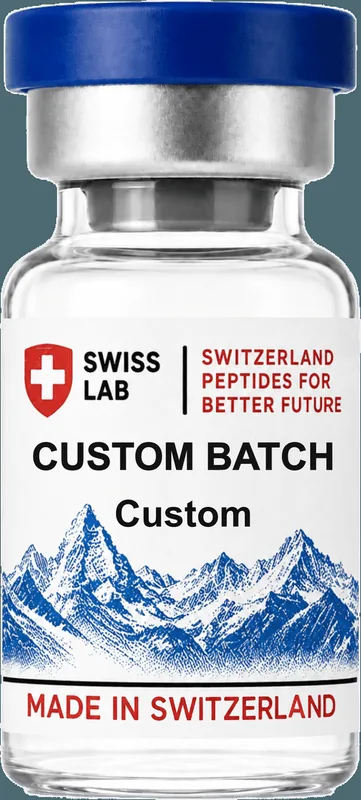
Bespoke Solid-Phase Peptide Synthesis (SPPS) from milligram to multi-gram scales supporting N-terminal acetylation, C-terminal amidation, D-amino acid substitution, disulfide cyclization, fluorescent tagging, and acetate/HCl counterion exchange.
Bespoke Solid-Phase Peptide Synthesis (SPPS) from milligram to multi-gram scales supporting N-terminal acetylation, C-terminal amidation, D-amino acid substitution, disulfide cyclization, fluorescent tagging, and acetate/HCl counterion exchange.
Analytical release verification for current Custom Peptide Batch (Custom (10mg–5g)) inventory
| Batch Lot # | Release Date | Analytical Method | Purity Spec | Endotoxin (LAL) | Moisture |
|---|---|---|---|---|---|
| SL-2026-119 | 2026-10-28 | RP-HPLC (C18, 214nm) + ESI-MS | ≥99.0% (Single Peak) | <0.5 EU/mg | <2.8% (Karl Fischer) |
Custom solubility profiling provided with batch CoA
Lyophilized under nitrogen purge at -20°C; custom aliquoting available.
Automated Fmoc solid-phase synthesis supports sequences from 4 to 70+ residues, including N-terminal acetylation, C-terminal amidation, D-amino acid substitutions, PEGylation, biotinylation, and intramolecular disulfide cyclization.
Yes. Residual trifluoroacetate (TFA) can interfere with sensitive cell-culture viability assays; optional ion-exchange conversion to acetate or HCl salt is available on request with analytical release documentation.
Every custom lot includes sequence-specific RP-HPLC chromatogram verification (≥98% or ≥99% grade), ESI-MS monoisotopic mass confirmation within ±0.1 Da, and Karl Fischer moisture release specs.
Peer-reviewed mechanism summaries and analytical protocols
Step-by-step analytical audit guide for laboratory buyers: why RP-HPLC purity alone does not prove sequence identity or vial milligram fill, plus how to detect altered or recycled COAs.
How European laboratories audit peptide suppliers in 2026 after UK storefront closures and overseas customs bottlenecks: entity transparency, batch traceability, SEPA settlement, and cold-chain dispatch.
Why Switzerland's non-EU customs boundary affects laboratory peptide shipping: FOCBS border clearance, Swissmedic Research Use Only (RUO) governance, and cold-chain thermal kinetics.
0 items selected • Min. order €220
Your cart is empty
Browse our catalog of research peptides and reagents (minimum order €220).