≥99.0%
€58
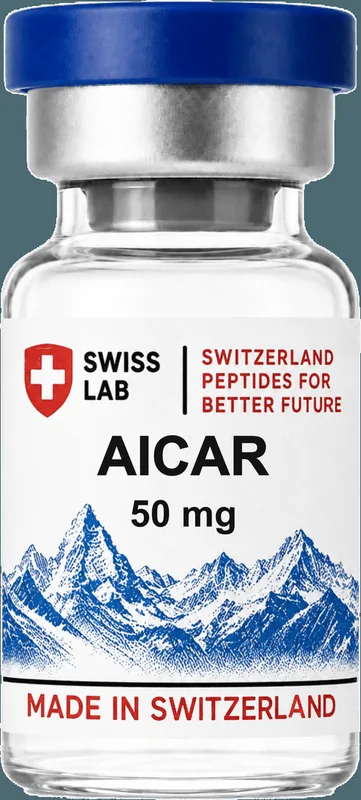
AICAR (Acadesine) is a cell-permeable purine nucleoside analog converted intracellularly to ZMP, mimicking AMP to allosterically activate AMPK in cellular bioenergetics, glucose uptake, and mitochondrial biogenesis assays.
AICAR (Acadesine) is a cell-permeable purine nucleoside analog converted intracellularly to ZMP, mimicking AMP to allosterically activate AMPK in cellular bioenergetics, glucose uptake, and mitochondrial biogenesis assays.
Analytical release verification for current AICAR (50 mg) inventory
| Batch Lot # | Release Date | Analytical Method | Purity Spec | Endotoxin (LAL) | Moisture |
|---|---|---|---|---|---|
| SL-2026-105 | 2026-10-28 | HPLC-UV + LC-MS (Small-Molecule Verification) | ≥99.0% (Chromatographic Peak) | <0.5 EU/mg | <2.8% (Karl Fischer) |
Sterile water (up to 15 mg/mL) or sterile DMSO (up to 50 mg/mL)
Store solid powder at -20°C dry; store aqueous working stocks at -20°C in single-use aliquots.
Reconstituting the full 50 mg vial of AICAR (MW 258.23 g/mol) in 2.0 mL of diluent produces a 25.00 mg/mL stock solution — equivalent to approximately 96.81 mM (96,813 µM) gross molarity before Net Peptide Content (NPC) adjustment.
AICAR (CAS 2627-69-2, formula C9H14N4O5) is supplied as Free base crystalline lyophilized solid. Because counterions and residual bound water contribute to gross lyophilized weight, quantitative receptor-binding assays should apply batch Net Peptide Content (NPC) or active-ion correction rather than gross cake weight alone.
Lot SL-2026-105 undergoes HPLC-UV + LC-MS (Small-Molecule Verification) confirming ≥99.0% (Chromatographic Peak) and identity against 258.23 g/mol. In preclinical literature, AICAR targets AMP-activated protein kinase (AMPK) (Narkar V.A. et al., Cell (2008) — AMPK and PPARδ agonists as exercise-mimetic research probes (PMID: 18674809)).
Peer-reviewed mechanism summaries and analytical protocols
Analytical profile of small-molecule pan-ERR agonist SLU-PP-332 (CAS 303760-60-3): nuclear receptor EC50 selectivity, mitochondrial respiration models, and DMSO stock preparation.
Biochemical comparison of long-acting amylin analogue Cagrilintide (AM833) against triple incretin agonist Retatrutide and dual-pathway Cagrilintide + Semaglutide combinations.
Comparative receptor pharmacology of Survodutide (BI 456906), Mazdutide (IBI362), and Retatrutide (LY3437943): GLP-1R/GCGR/GIPR potency ratios and stability.
0 items selected • Min. order €220
Your cart is empty
Browse our catalog of research peptides and reagents (minimum order €220).