≥99.0%
€58
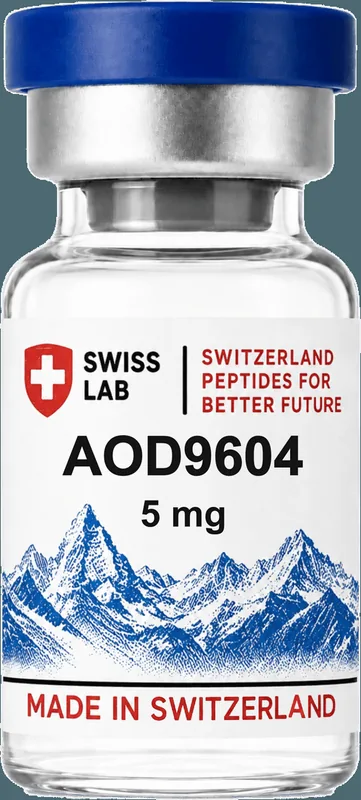
AOD-9604 is a modified 16-amino acid C-terminal fragment of human growth hormone (Tyr-hGH 177–191) stabilized by a Cys7–Cys14 disulfide loop, studied in lipolysis and anti-lipogenesis models independent of IGF-1 proliferation.
AOD-9604 is a modified 16-amino acid C-terminal fragment of human growth hormone (Tyr-hGH 177–191) stabilized by a Cys7–Cys14 disulfide loop, studied in lipolysis and anti-lipogenesis models independent of IGF-1 proliferation.
Analytical release verification for current AOD-9604 (5 mg) inventory
| Batch Lot # | Release Date | Analytical Method | Purity Spec | Endotoxin (LAL) | Moisture |
|---|---|---|---|---|---|
| SL-2026-106 | 2026-10-28 | RP-HPLC (C18, 214nm) + ESI-MS | ≥99.0% (Single Peak) | <0.5 EU/mg | <2.8% (Karl Fischer) |
Pre-solubilize in 0.1–0.2 mL sterile 0.6% Acetic Acid, then dilute with sterile Bacteriostatic Water
Store lyophilized vial at -20°C; refrigerate reconstituted solution at 2°C–8°C and avoid alkaline pH (>7.5) to prevent gelation.
Reconstituting the full 5 mg vial of AOD-9604 (MW 1815.08 g/mol) in 2.0 mL of diluent produces a 2.50 mg/mL stock solution — equivalent to approximately 1.38 mM (1,377 µM) gross molarity before Net Peptide Content (NPC) adjustment.
AOD-9604 (CAS 221231-10-3, formula C78H123N23O23S2) is supplied as Acetate lyophilized salt. Because counterions and residual bound water contribute to gross lyophilized weight, quantitative receptor-binding assays should apply batch Net Peptide Content (NPC) or active-ion correction rather than gross cake weight alone.
Lot SL-2026-106 undergoes RP-HPLC (C18, 214nm) + ESI-MS confirming ≥99.0% (Single Peak) and identity against 1815.08 g/mol. In preclinical literature, AOD-9604 targets β3-adrenergic lipolytic signaling pathways (non-IGF-1 axis) (Ng F.M. et al., Horm Res (2000) — Metabolic actions of human growth hormone C-terminal fragment 177–191 (PMID: 11146367)).
Peer-reviewed mechanism summaries and analytical protocols
Analytical profile of small-molecule pan-ERR agonist SLU-PP-332 (CAS 303760-60-3): nuclear receptor EC50 selectivity, mitochondrial respiration models, and DMSO stock preparation.
Biochemical comparison of long-acting amylin analogue Cagrilintide (AM833) against triple incretin agonist Retatrutide and dual-pathway Cagrilintide + Semaglutide combinations.
Comparative receptor pharmacology of Survodutide (BI 456906), Mazdutide (IBI362), and Retatrutide (LY3437943): GLP-1R/GCGR/GIPR potency ratios and stability.
0 items selected • Min. order €220
Your cart is empty
Browse our catalog of research peptides and reagents (minimum order €220).