PT-141 (Bremelanotide): Cyclic Peptide Structure, Central Melanocortin Pathways, and Receptor Kinetics
A deep analysis of Bremelanotide (PT-141), the active metabolite of Melanotan II. Central MC3R/MC4R agonism, hypothalamic signaling, and analytical HPLC characterization. PT-141 (Bremelanotide) is a synthetic cyclic heptapeptide with the sequence Ac-Nle-cyclo[Asp-His-D-Phe-Arg-Trp-Lys]-OH.
- PT-141 (Bremelanotide) is a synthetic cyclic heptapeptide with the sequence Ac-Nle-cyclo[Asp-His-D-Phe-Arg-Trp-Lys]-OH.
- Differs from Melanotan II by possessing a free C-terminal carboxyl group (-OH) instead of a terminal amide (-NH2).
- Acts primarily via central melanocortin receptors (MC3R and MC4R) in the medial preoptic area of the hypothalamus.
- Bypasses the vascular/peripheral pathway, operating strictly via neurochemical dopaminergic and oxytocinergic activation.
- High structural stability due to internal lactam cyclization between Asp4 and Lys9.
| CAS Registry Number | 189741-10-0 |
|---|---|
| Molecular Formula | C50H68N14O10 |
| Molecular Mass | 1025.18 g/mol |
| Primary Biological Target | Central MC3R & MC4R Receptors |
| Analytical Purity Standard | ≥99.0% (RP-HPLC, C18, 214/220 nm) |
| Identity Verification | ESI-MS (±0.1 Da) + Karl Fischer Moisture (<3.0%) |
| Lyophilized Storage | -20°C desiccated, protected from UV light (24–36 months) |
| Reconstituted Storage | 2°C–8°C refrigerated (up to 28 days in 0.9% BA BAC water) |
1. Chemical Structure: PT-141 vs Melanotan II
PT-141 (Bremelanotide) was developed as a metabolite derivative of Melanotan II. Structurally, PT-141 is Ac-Nle-cyclo[Asp-His-D-Phe-Arg-Trp-Lys]-OH. The crucial chemical distinction is at the C-terminus: while Melanotan II terminates with an amide group (-CONH2), PT-141 terminates with a free carboxyl group (-COOH). This modification significantly shifts the pharmacological profile away from cutaneous MC1R pigmentation towards central MC3R and MC4R neuroreceptor pathways.
2. Central Nervous System Mechanism of Action
Unlike peripheral phosphodiesterase-5 (PDE-5) inhibitors that act via nitric oxide-mediated vascular smooth muscle relaxation, PT-141 operates centrally within the brain. Agonism of melanocortin MC4 receptors in the medial preoptic area (mPOA) triggers local dopamine release and activates downstream paraventricular oxytocin neurons, mediating autonomic sexual arousal responses in animal models.
3. Pharmacokinetics and Half-Life in Research Models
The cyclic lactam conformation protects PT-141 from rapid aminopeptidase and carboxypeptidase degradation. In experimental pharmacokinetic models, PT-141 exhibits a terminal elimination half-life of approximately 2.0 to 2.7 hours, with sustained central receptor occupancy and biological onset within 45 to 90 minutes.
4. Laboratory Reconstitution and Handling
PT-141 is supplied as a white lyophilized trifluoroacetate or acetate salt. It dissolves readily in sterile 0.9% Benzyl Alcohol Bacteriostatic Water at concentrations up to 20 mg/mL. Store solid vials at -20°C; reconstituted solutions remain stable for up to 30 days under refrigeration at 2°C to 8°C.
5. Bench Preparation & Assay Reproducibility for PT-141 (Bremelanotide)
When designing in-vitro experiments targeting Central MC3R & MC4R Receptors, normalize dosing across replicates by molar concentration (µM or nM) using the published molecular weight (1025.18 g/mol) and batch counterion composition rather than gross powder weight alone. Log lot numbers, diluent pH, and aliquot dates to ensure batch-to-batch reproducibility across longitudinal experiments.
Peer-Reviewed References & Analytical Standards
- Molinoff P.B. et al. (2003). PT-141: a melanocortin agonist for the treatment of sexual dysfunction. Annals of the New York Academy of Sciences, 994, 96–102. [PMID: 12851303 ↗]
- King S.H. et al. (2007). Melanocortin receptors, melanotropic peptides and penile erection. Current Topics in Medicinal Chemistry, 7(11), 1098–1106. [PMID: 17584130 ↗]
Referenced Laboratory Research Reagents
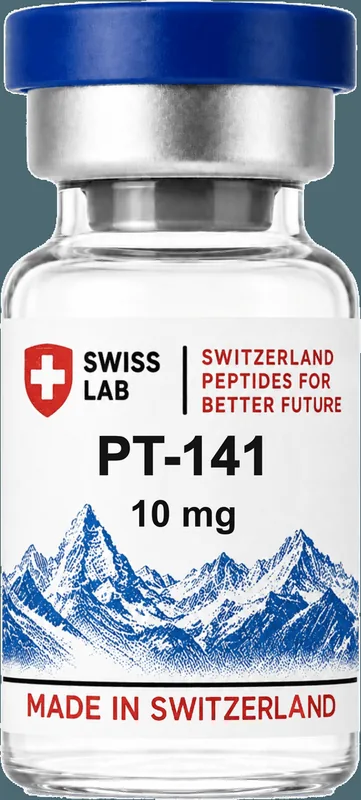
Batch-verified SwissLab catalog entries cited in this monograph
All analytical monographs and chemical data are published strictly for in-vitro laboratory research and scientific reference. Reagents must be handled by qualified personnel wearing appropriate PPE. Not for human or veterinary use.