≥99.0%
€42
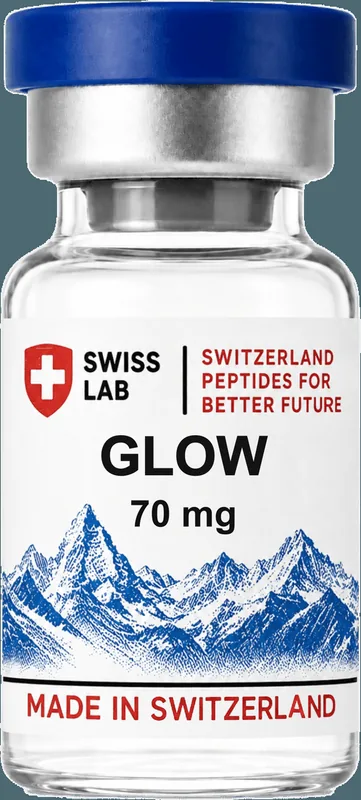
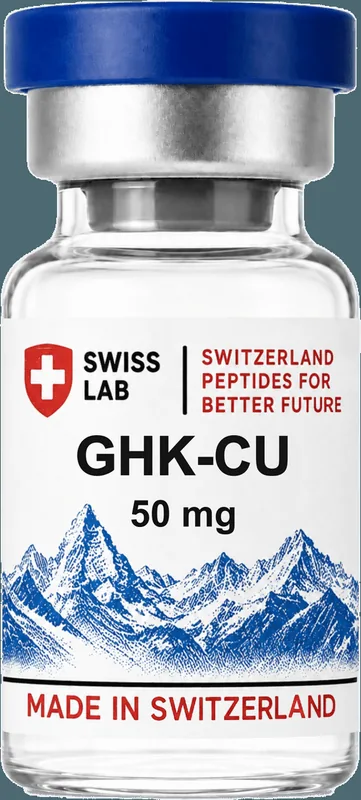
GLOW Blend is a tri-peptide co-lyophilized research formulation uniting GHK-Cu (50 mg), BPC-157 (10 mg), and TB-500 (10 mg) to study synergistic collagen synthesis, angiogenesis, and fibroblast migration.
GLOW Blend is a tri-peptide co-lyophilized research formulation uniting GHK-Cu (50 mg), BPC-157 (10 mg), and TB-500 (10 mg) to study synergistic collagen synthesis, angiogenesis, and fibroblast migration.
Analytical release verification for current Glow Blend (70 mg (50/10/10)) inventory
| Batch Lot # | Release Date | Analytical Method | Purity Spec | Endotoxin (LAL) | Moisture |
|---|---|---|---|---|---|
| SL-2026-127 | 2026-10-28 | Gradient RP-HPLC (Multi-Peak Resolution) + ESI-MS | ≥99.0% (Resolved Constituent Peaks) | <0.5 EU/mg | <2.8% (Karl Fischer) |
Sterile 0.9% Bacteriostatic Water (3.0 mL); gently swirl to clear blue solution
Store lyophilized at -20°C; refrigerate reconstituted solution at 2°C–8°C for up to 28 days.
Because co-lyophilized blends contain multiple sequences with distinct retention times, Lot SL-2026-127 is evaluated via gradient RP-HPLC to resolve each constituent peak independently, paired with ESI-MS mass confirmation (403.93 / 1419.53 / 4963.50 g/mol).
Calculate each active constituent separately based on its labeled mass ratio (70 mg (50/10/10)) divided by total diluent volume added. For example, adding 2.0 mL of sterile diluent yields proportional mg/mL concentrations for every component simultaneously.
Investigators study Glow Blend in Extracellular matrix remodeling, VEGFR2 angiogenesis & G-actin motility models. Primary published literature context: Pickart L. (2018), Chang C.H. (2011) & Goldstein A.L. (2012) — Multi-pathway dermal & vascular remodeling models. All lots are supplied strictly for in-vitro laboratory experimentation.
Peer-reviewed mechanism summaries and analytical protocols
A biochemical review of the human tripeptide copper complex GHK-Cu. Epigenetic gene resetting, metalloproteinase modulation, collagen/elastin synthesis, and analytical HPLC verification.
A molecular analysis of reduced Glutathione (GSH) vs oxidized Glutathione Disulfide (GSSG). Why the unusual gamma-peptide bond protects against intracellular peptidases.
Analyzing complex multi-compound formulations (GHK-Cu, BPC-157, TB-500, KPV). How co-lyophilization affects individual peptide stability, retention peaks, and analytical verification.
0 items selected • Min. order €220
Your cart is empty
Browse our catalog of research peptides and reagents (minimum order €220).