≥99.0%
€58
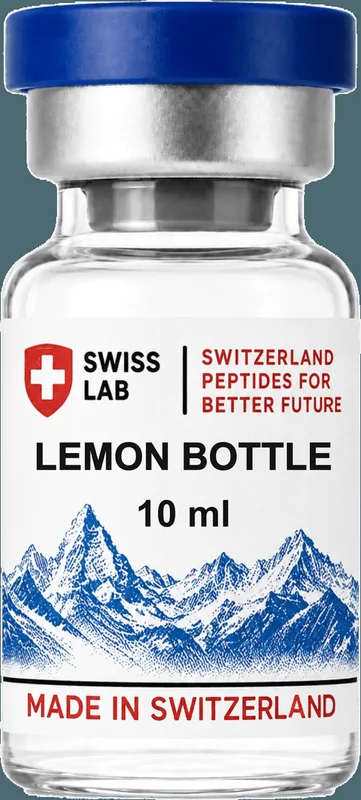
Standardized multi-component research solution combining Riboflavin (Vitamin B2), phosphatidylcholine-rich Lecithin, and proteolytic Bromelain enzymes for in-vitro lipid emulsification and adipocyte membrane studies.
Standardized multi-component research solution combining Riboflavin (Vitamin B2), phosphatidylcholine-rich Lecithin, and proteolytic Bromelain enzymes for in-vitro lipid emulsification and adipocyte membrane studies.
Analytical release verification for current Lemon Bottle (10 ml) inventory
| Batch Lot # | Release Date | Analytical Method | Purity Spec | Endotoxin (LAL) | Moisture |
|---|---|---|---|---|---|
| SL-2026-140 | 2026-10-28 | USP Sterility & LAL Endotoxin (<0.25 EU/mL) | Pass (USP <71>/<85>) | <0.25 EU/mL | Aqueous |
Ready-to-use sterile 10 ml research vial
Store at 15°C–25°C shielded from light (Riboflavin is photosensitive); refrigerate after opening.
Lemon Bottle is sterile-filtered through a 0.22 µm membrane into USP Type I borosilicate glass vials and evaluated under USP <71> sterility and USP <85> LAL endotoxin (<0.25 EU/mL) benchmarks for multi-entry laboratory diluent reliability.
Freezing aqueous sterile diluents inside sealed borosilicate glass vials causes volumetric ice expansion that can fracture glass walls or deform elastomeric septa, compromising sterility. Keep liquid vials upright at controlled ambient temperature.
Lemon Bottle is formulated specifically for adipocyte lipid-emulsification & enzymatic proteolysis models. Always verify target peptide isoelectric point (pI) and hydrophobicity before selecting neutral vs. mildly acidic co-solvents.
Peer-reviewed mechanism summaries and analytical protocols
Analytical profile of small-molecule pan-ERR agonist SLU-PP-332 (CAS 303760-60-3): nuclear receptor EC50 selectivity, mitochondrial respiration models, and DMSO stock preparation.
Biochemical comparison of long-acting amylin analogue Cagrilintide (AM833) against triple incretin agonist Retatrutide and dual-pathway Cagrilintide + Semaglutide combinations.
Comparative receptor pharmacology of Survodutide (BI 456906), Mazdutide (IBI362), and Retatrutide (LY3437943): GLP-1R/GCGR/GIPR potency ratios and stability.
0 items selected • Min. order €220
Your cart is empty
Browse our catalog of research peptides and reagents (minimum order €220).