Epitalon (Ala-Glu-Asp-Gly): Pineal Bioregulator Mechanism, Telomerase Induction, and Epigenetic Transcriptomics
An in-depth review of the synthetic pineal peptide Epitalon (Epithalon). Telomerase reverse transcriptase (TERT) gene expression, chromatin remodeling, melatonin synthesis, and Hayflick limit assays. Epitalon is a synthetic ultra-short peptide (Ala-Glu-Asp-Gly) based on natural bovine pineal extract Epithalamin.
- Epitalon is a synthetic ultra-short peptide (Ala-Glu-Asp-Gly) based on natural bovine pineal extract Epithalamin.
- Directly stimulates human telomerase reverse transcriptase (hTERT) gene promoter activity in somatic cell cultures.
- Extends the Hayflick limit in human diploid fibroblasts, allowing 10–12 additional population doublings.
- Binds sequence-specifically to the promoter regions of telomeric and pineal genes, facilitating epigenetic transcriptional activation.
| CAS Registry Number | 307297-39-8 |
|---|---|
| Molecular Formula | C14H22N4O9 |
| Molecular Mass | 390.35 g/mol |
| Primary Biological Target | Telomerase Reverse Transcriptase (TERT) & Pineal Epigenetics |
| Analytical Purity Standard | ≥99.0% (RP-HPLC, C18, 214/220 nm) |
| Identity Verification | ESI-MS (±0.1 Da) + Karl Fischer Moisture (<3.0%) |
| Lyophilized Storage | -20°C desiccated, protected from UV light (24–36 months) |
| Reconstituted Storage | 2°C–8°C refrigerated (up to 28 days in 0.9% BA BAC water) |
1. Peptide Structure: The Ala-Glu-Asp-Gly Sequence
Epitalon (Epithalon, AEDG) is a synthetic tetrapeptide with the primary amino acid sequence H-Ala-Glu-Asp-Gly-OH. Originally isolated and characterized by the St. Petersburg Institute of Bioregulation and Gerontology from Epithalamin, Epitalon has a molecular weight of 390.35 g/mol. With two acidic residues (glutamic acid and aspartic acid) and no basic residues, Epitalon carries a net negative charge at physiological pH 7.4, rendering it exceptionally soluble in aqueous buffers.
2. Mechanism of Telomerase Activation and TERT Expression
Somatic cells normally repress telomerase reverse transcriptase (hTERT) expression, resulting in progressive telomere shortening of 50–100 base pairs per cell cycle until reaching the Hayflick limit (replicative senescence). In-vitro experiments on human fetal and adult fibroblast cultures demonstrate that Epitalon induces hTERT mRNA and protein expression, activating telomerase enzyme activity and extending telomere length by up to 2.4-fold compared to control cohorts.
3. Epigenetic Chromatin Remodeling and Melatonin Regulation
Electrophoretic mobility shift assays (EMSA) and molecular modeling reveal that Epitalon penetrates both the cellular and nuclear membranes. The tetrapeptide intercalates into the major groove of double-stranded DNA, specifically targeting GATT and GC-rich promoter motifs. This site-specific binding induces local chromatin decondensation (euchromatin formation), reactivating the expression of serotonin N-acetyltransferase (AANAT) and restoring nocturnal melatonin synthesis in aged pinealocyte models.
4. Laboratory Preparation and Assay Protocols
Epitalon is highly hydro-soluble. Lyophilized aliquots dissolve instantly in sterile Bacteriostatic Water or PBS at concentrations up to 20 mg/mL without requiring pH modifiers. Lyophilized stocks remain stable at -20°C for over 36 months. Reconstituted solutions maintain full chromatographic and bio-potency profiles for 30 days at 2°C to 8°C.
5. Bench Preparation & Assay Reproducibility for Epitalon (Ala-Glu-Asp-Gly)
When designing in-vitro experiments targeting Telomerase Reverse Transcriptase (TERT) & Pineal Epigenetics, normalize dosing across replicates by molar concentration (µM or nM) using the published molecular weight (390.35 g/mol) and batch counterion composition rather than gross powder weight alone. Log lot numbers, diluent pH, and aliquot dates to ensure batch-to-batch reproducibility across longitudinal experiments.
Peer-Reviewed References & Analytical Standards
- Khavinson V.K., Bondarev I.E., Butyugov A.A. (2003). Epithalon peptide induces telomerase activity and telomere elongation in human somatic cells. Bulletin of Experimental Biology and Medicine, 135(6), 590–592. [PMID: 12937682 ↗]
- Anisimov V.N. et al. (2003). Effect of Epitalon on biomarkers of aging, life span and spontaneous tumor incidence in female Swiss-derived SHR mice. Biogerontology, 4(4), 193–202. [PMID: 14501183 ↗]
Referenced Laboratory Research Reagents
Batch-verified SwissLab catalog entries cited in this monograph

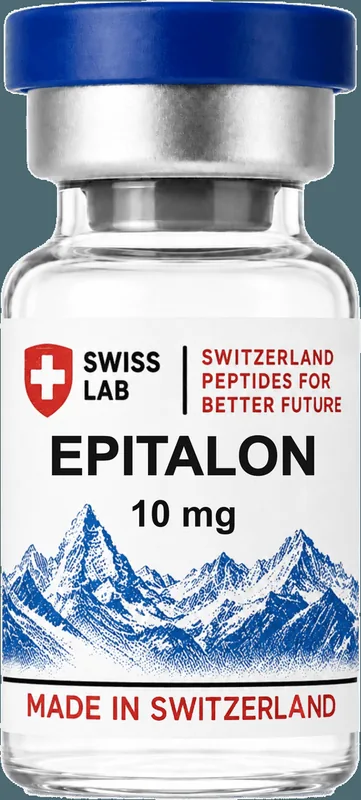
All analytical monographs and chemical data are published strictly for in-vitro laboratory research and scientific reference. Reagents must be handled by qualified personnel wearing appropriate PPE. Not for human or veterinary use.