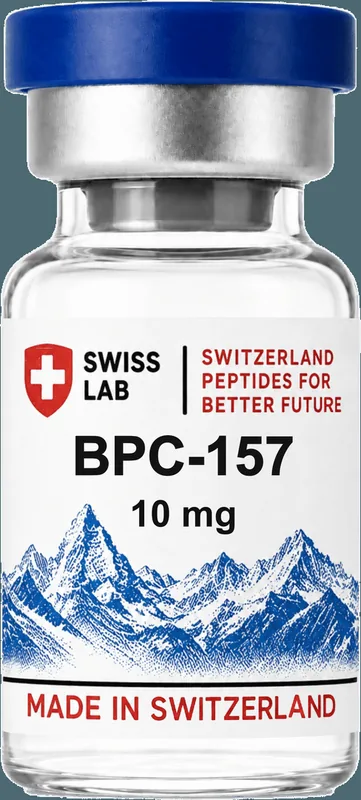
What Is Bacteriostatic Water? USP Formulation, 0.9% Benzyl Alcohol, and Sterile Storage
An analytical guide to laboratory reconstitution diluents. USP Bacteriostatic Water vs Sterile Water for Injection, antimicrobial mechanism of 0.9% Benzyl Alcohol, and pH stability. Bacteriostatic Water for Injection USP consists of non-pyrogenic sterile water containing 0.9% (9 mg/mL) Benzyl Alcohol as an antimicrobial preservative.
- Bacteriostatic Water for Injection USP consists of non-pyrogenic sterile water containing 0.9% (9 mg/mL) Benzyl Alcohol as an antimicrobial preservative.
- Plain Sterile Water (SWFI) lacks preservatives; once punctured, bacteria can proliferate within 24 hours.
- 0.9% Benzyl Alcohol disrupts bacterial cell membranes, preventing microbial growth across multi-dose vial punctures for 28 days.
- Maintains a physiological pH of 4.5–7.0, optimal for peptide solubility and stability.
- Not for use in neonatal models or with specific compounds incompatible with aromatic preservatives.
| CAS Registry Number | 100-51-6 (Benzyl Alcohol) / 7732-18-5 (Water) |
|---|---|
| Molecular Formula | H2O + 0.9% C7H8O |
| Molecular Mass | 18.02 g/mol / 108.14 g/mol |
| Primary Biological Target | Bacterial Membrane Disruption & Sterility |
| Analytical Purity Standard | ≥99.0% (RP-HPLC, C18, 214/220 nm) |
| Identity Verification | ESI-MS (±0.1 Da) + Karl Fischer Moisture (<3.0%) |
| Lyophilized Storage | -20°C desiccated, protected from UV light (24–36 months) |
| Reconstituted Storage | 2°C–8°C refrigerated (up to 28 days in 0.9% BA BAC water) |
1. Chemical Composition of Bacteriostatic Water USP
Bacteriostatic Water for Injection (BWFI) is ultra-pure, non-pyrogenic, sterile water containing precisely 0.9% w/v (9 mg/mL) Benzyl Alcohol (C6H5CH2OH). It is manufactured under strict USP monograph standards with endotoxin limits below 0.25 EU/mL and heavy metal levels below 0.1 ppm.
2. Antimicrobial Mechanism of 0.9% Benzyl Alcohol
Benzyl alcohol is an aromatic alcohol that acts as a bacteriostatic preservative. It integrates into the phospholipid bilayer of bacterial cell membranes, increasing membrane fluidity, disrupting proton gradients, and inhibiting cellular respiration. It prevents the growth of Gram-positive and Gram-negative bacteria (such as E. coli, P. aeruginosa, and S. aureus) as well as common airborne yeasts and molds introduced during needle punctures.
3. Bacteriostatic Water vs Sterile Water for Injection (SWFI)
Plain Sterile Water for Injection (SWFI) is completely sterile upon opening but contains no preservative. Once punctured, environmental microbes can multiply rapidly at 4°C, creating bioburden that secretes proteolytic enzymes and destroys peptide chains within 24–48 hours. Bacteriostatic Water allows repeated needle entries into multi-dose research vials over a 28-day window when refrigerated.
4. Laboratory Protocol and Storage Guidelines
Store unopened Bacteriostatic Water vials at 20°C to 25°C. Once punctured, mark the date on the vial label and store at 2°C to 8°C. Discard any remaining diluent 28 days after first needle puncture to ensure sterility.
5. Diluent Qualification & Multi-Entry Bench Controls
Before introducing any sterile diluent into high-value lyophilized peptides, inspect the borosilicate vial for particulate matter, confirm intact aluminum crimp seals, and verify lot expiration dates. Never freeze aqueous 0.9% benzyl alcohol or saline vials, and record the initial septum puncture date so multi-entry stocks are rotated within the 28-day USP <51> antimicrobial preservation window.
Peer-Reviewed References & Analytical Standards
- United States Pharmacopeia (USP-NF) Monograph: Bacteriostatic Water for Injection & General Chapter <51> Antimicrobial Effectiveness Testing. [USP-NF <51> ↗]
- Meyer B.K. et al. (2007). Antimicrobial preservative use in parenteral products: past and present. Journal of Pharmaceutical Sciences, 96(12), 3155–3167. [PMID: 17722087 ↗]
Referenced Laboratory Research Reagents
Batch-verified SwissLab catalog entries cited in this monograph
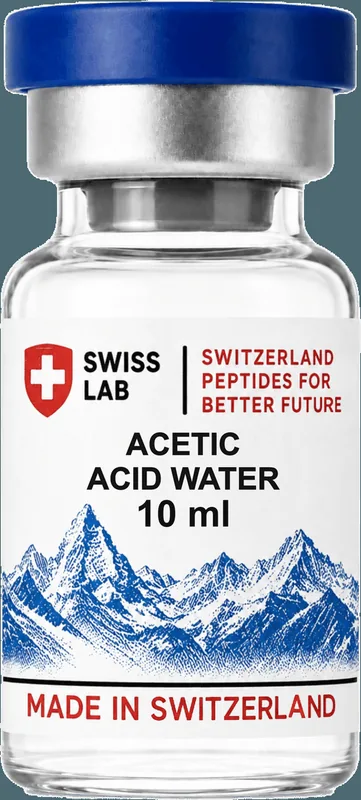
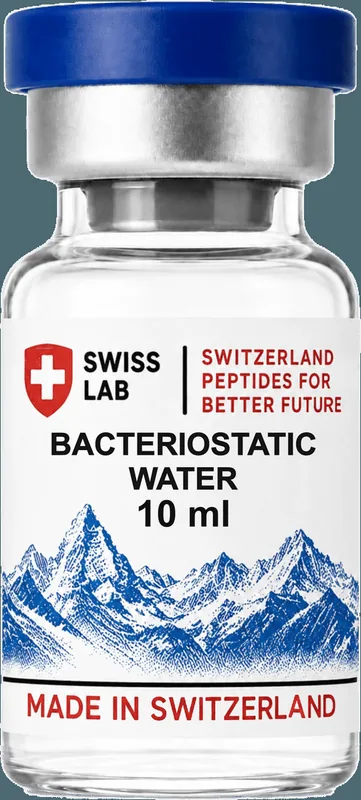
All analytical monographs and chemical data are published strictly for in-vitro laboratory research and scientific reference. Reagents must be handled by qualified personnel wearing appropriate PPE. Not for human or veterinary use.