≥99.0%
€52
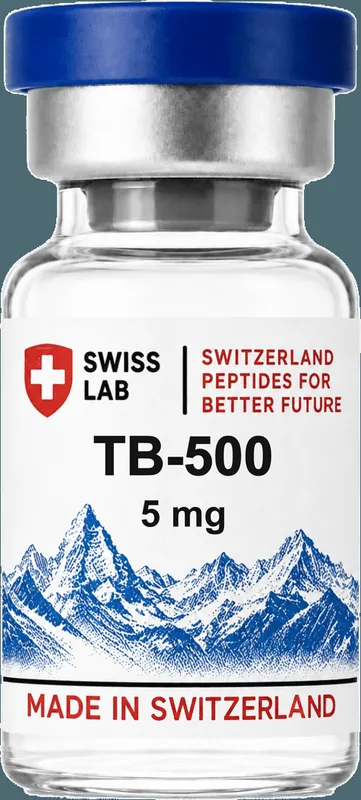
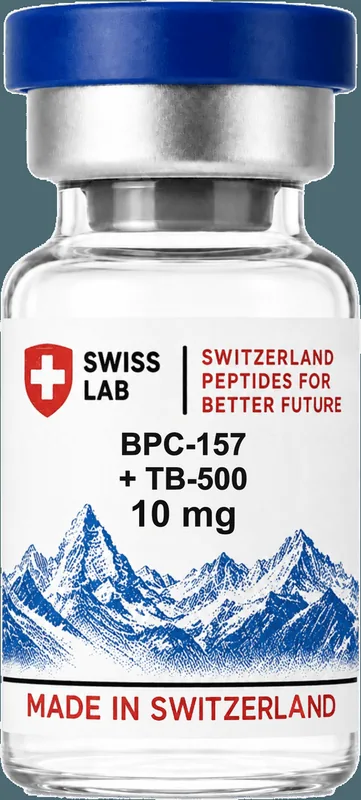
TB-500 is the synthetic 43-amino acid Thymosin Beta-4 polypeptide featuring an N-terminal acetyl cap that sequesters globular actin (G-actin) in a 1:1 complex, accelerating endothelial and keratinocyte migration in tissue-repair models.
TB-500 is the synthetic 43-amino acid Thymosin Beta-4 polypeptide featuring an N-terminal acetyl cap that sequesters globular actin (G-actin) in a 1:1 complex, accelerating endothelial and keratinocyte migration in tissue-repair models.
Analytical release verification for current TB-500 (10 mg) inventory
| Batch Lot # | Release Date | Analytical Method | Purity Spec | Endotoxin (LAL) | Moisture |
|---|---|---|---|---|---|
| SL-2026-161 | 2026-10-28 | RP-HPLC (C18, 214nm) + ESI-MS | ≥99.0% (Single Peak) | <0.5 EU/mg | <2.8% (Karl Fischer) |
Sterile 0.9% Bacteriostatic Water (2.0 mL); gently roll vial, do not vortex
Store lyophilized at -20°C; refrigerate reconstituted solution at 2°C–8°C for up to 28 days.
Reconstituting the full 10 mg vial of TB-500 (MW 4963.50 g/mol) in 2.0 mL of diluent produces a 5.00 mg/mL stock solution — equivalent to approximately 1.01 mM (1,007 µM) gross molarity before Net Peptide Content (NPC) adjustment.
TB-500 (CAS 77591-33-4, formula C212H350N56O78S) is supplied as Acetate lyophilized salt. Because counterions and residual bound water contribute to gross lyophilized weight, quantitative receptor-binding assays should apply batch Net Peptide Content (NPC) or active-ion correction rather than gross cake weight alone.
Lot SL-2026-161 undergoes RP-HPLC (C18, 214nm) + ESI-MS confirming ≥99.0% (Single Peak) and identity against 4963.50 g/mol. In preclinical literature, TB-500 targets Monomeric G-Actin sequestration, cell motility & angiogenesis (Goldstein A.L. et al., Expert Opin Biol Ther (2012) — Thymosin β4 actin-binding and tissue regeneration mechanisms (PMID: 22074294)).
Peer-reviewed mechanism summaries and analytical protocols
A comparative analysis of Body Protection Compound-157 (pentadecapeptide) and Thymosin Beta-4 active fragment TB-500. Differences in VEGF signaling, actin sequestration, and combined laboratory models.
A biochemical review of Thymosin Beta-4 and its synthetic sequence TB-500. G-actin monomer sequestering, cell migration, down-regulation of inflammation, and HPLC analysis.
A practical guide for researchers. How to analyze HPLC chromatograms, verify retention time, interpret mass spec m/z peaks, evaluate counterion salt ratios, and spot fraudulent documents.
0 items selected • Min. order €220
Your cart is empty
Browse our catalog of research peptides and reagents (minimum order €220).