BPC-157 vs TB-500 vs KPV: Tendon Repair, Actin & Inflammatory Pathways
A comparative analysis of Body Protection Compound-157 (pentadecapeptide) and Thymosin Beta-4 active fragment TB-500. Differences in VEGF signaling, actin sequestration, and combined laboratory models. BPC-157 is a 15-amino acid fragment derived from human gastric juice protein.
- BPC-157 is a 15-amino acid fragment derived from human gastric juice protein.
- TB-500 represents the active acetylated sequence of Thymosin Beta-4 (Ac-Ser-Asp-Lys-Pro-...).
- BPC-157 functions primarily via nitric oxide (NO) upregulation, VEGFR2 activation, and early growth response-1 (egr-1) stimulation.
- TB-500 sequesters globular actin (G-actin), accelerating cell motility, angiogenesis, and lamellipodia formation.
- In research stacks, they exhibit non-overlapping, synergistic pathways in tendon and dermal injury models.
| CAS Registry Number | 137525-51-0 / 77591-33-4 |
|---|---|
| Molecular Formula | C62H98N16O22 / C212H350N56O78S |
| Molecular Mass | 1419.53 g/mol / 4963.5 g/mol |
| Primary Biological Target | VEGF/NO Pathway & G-Actin Sequestration |
| Analytical Purity Standard | ≥99.0% (RP-HPLC, C18, 214/220 nm) |
| Identity Verification | ESI-MS (±0.1 Da) + Karl Fischer Moisture (<3.0%) |
| Lyophilized Storage | -20°C desiccated, protected from UV light (24–36 months) |
| Reconstituted Storage | 2°C–8°C refrigerated (up to 28 days in 0.9% BA BAC water) |
1. Sequence Structure and Chemical Origin
BPC-157 (Gly-Glu-Pro-Pro-Pro-Gly-Lys-Pro-Ala-Asp-Asp-Ala-Gly-Leu-Val) is a 15-amino acid peptide synthesized without post-translational glycosylation, retaining remarkable stability in acidic gastric environments (pH 1-3). TB-500, by contrast, is a 43-amino acid synthetic polypeptide identical to the naturally occurring Thymosin β4 sequence. While BPC-157 is a compact 1.4 kDa molecule, TB-500 is a larger 4.96 kDa sequence featuring an N-terminal acetyl group that prevents rapid exopeptidase degradation.
2. Differential Molecular Mechanisms of Action
The biological mechanisms of BPC-157 and TB-500 are distinct yet complementary. BPC-157 primarily modulates the nitric oxide (NO) signaling cascade, promoting vascular endothelial growth factor receptor 2 (VEGFR2) internalisation and Akt-eNOS pathway activation. This stimulates rapid granulation tissue formation and collateral blood vessel sprouting. TB-500 acts via direct binding to monomeric G-actin, sequestering actin monomers in a 1:1 complex to control actin polymerization dynamics, which enables rapid cell migration into damaged tissue matrices.
3. Tendon, Ligament, and Myofibril In-Vitro Models
In fibroblast culture assays, BPC-157 significantly upregulates the expression of type I and type III collagen mRNA and stimulates FAK (focal adhesion kinase) and paxillin phosphorylation. TB-500 complements this by downregulating pro-fibrotic cytokines (such as TGF-β1) and matrix metalloproteinases (MMPs), thereby promoting regenerative tissue healing rather than dense, non-elastic scar tissue formation.
4. Laboratory Protocol and Reconstitution Guidelines
Both compounds are lyophilized as white cakes. Reconstitution requires sterile 0.9% Benzyl Alcohol Bacteriostatic Water. BPC-157 dissolves rapidly into a clear solution at concentrations up to 10 mg/mL. TB-500 should be rehydrated slowly without vortexing to avoid mechanical shearing of the longer 43-amino acid chain. Reconstituted solutions maintain potency for 28 days when stored between 2°C and 8°C.
5. Adding KPV (Lys-Pro-Val): Three-Way Comparison in Tendon & Epithelial Models
Whereas BPC-157 drives VEGFR2/Akt-eNOS angiogenesis and tenocyte outgrowth and TB-500 sequesters globular actin (G-actin) to accelerate fibroblast migration, the α-MSH C-terminal tripeptide KPV (CAS 67727-97-3, MW 342.43 g/mol) acts primarily through PepT1-mediated intracellular uptake and direct NF-κB nuclear translocation inhibition. In comparative tendon repair and mucosal inflammation bioassays, KPV suppresses pro-inflammatory cytokines (IL-6, TNF-α, IL-1β) without activating MC1R melanogenesis—explaining why researchers study BPC-157, TB-500, and KPV as mechanistically orthogonal controls.
5. Bench Preparation & Assay Reproducibility for BPC-157 vs TB-500
When designing in-vitro experiments targeting VEGF/NO Pathway & G-Actin Sequestration, normalize dosing across replicates by molar concentration (µM or nM) using the published molecular weight (1419.53 g/mol / 4963.5 g/mol) and batch counterion composition rather than gross powder weight alone. Log lot numbers, diluent pH, and aliquot dates to ensure batch-to-batch reproducibility across longitudinal experiments.
Peer-Reviewed References & Analytical Standards
- Chang C.H. et al. (2011). The promoting effect of pentadecapeptide BPC 157 on tendon healing involves tendon outgrowth, cell survival, and cell migration. Journal of Applied Physiology, 110(3), 774–780. [PMID: 21030672 ↗]
- Goldstein A.L., Hannappel E., Sosne G., Kleinman H.K. (2012). Thymosin β4: a multi-functional regenerative peptide. Basic properties and clinical applications. Expert Opinion on Biological Therapy, 12(1), 37–51. [PMID: 22074294 ↗]
- Hsieh M.J. et al. (2017). Therapeutic potential of pro-angiogenic BPC157 is associated with VEGFR2 activation and up-regulation. Journal of Molecular Medicine, 95(3), 323–333. [PMID: 27847966 ↗]
- Kannengiesser K. et al. (2008). Melanocortin-derived tripeptide KPV has anti-inflammatory potential in murine models of inflammatory bowel disease. Inflammatory Bowel Diseases, 14(3), 324–331. [PMID: 18092346 ↗]
Referenced Laboratory Research Reagents
Batch-verified SwissLab catalog entries cited in this monograph
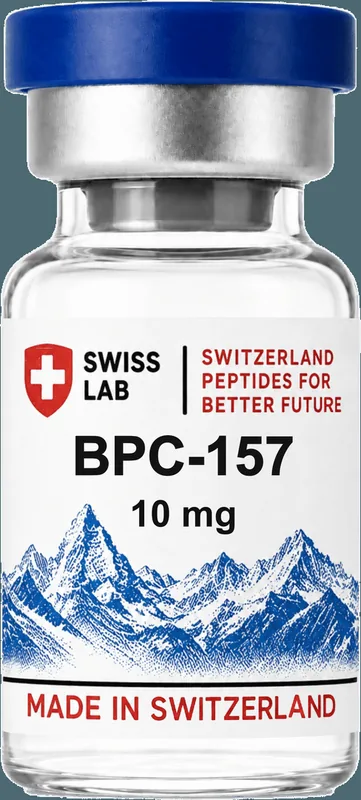
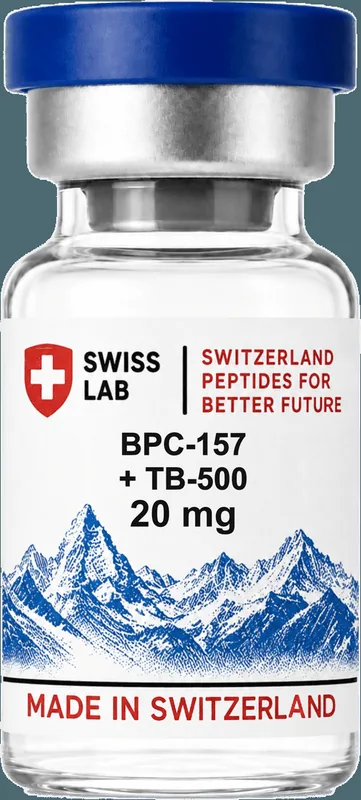
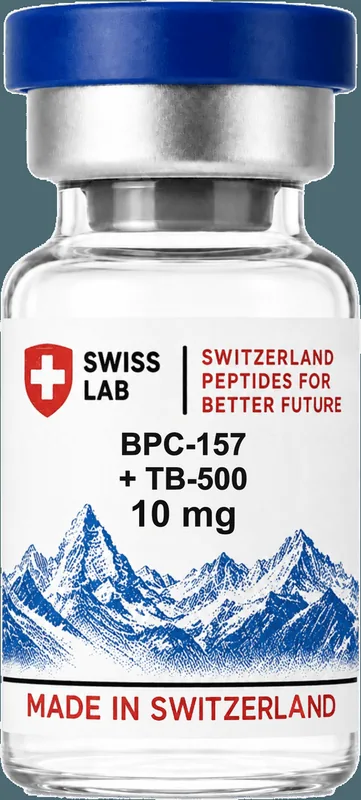
All analytical monographs and chemical data are published strictly for in-vitro laboratory research and scientific reference. Reagents must be handled by qualified personnel wearing appropriate PPE. Not for human or veterinary use.