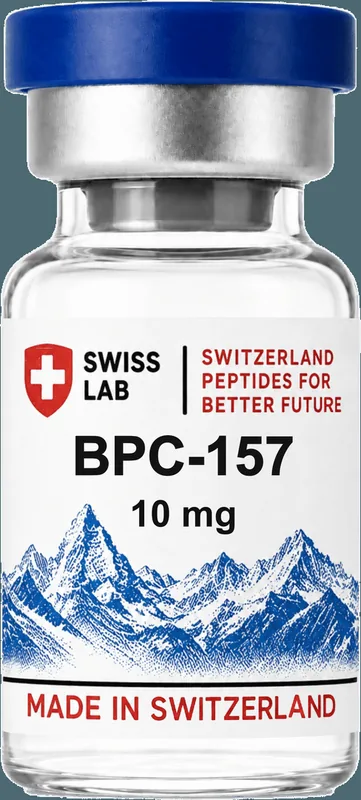
TB-500 (Thymosin β4): Actin Regulation, Cell Motility, and Angiogenesis in Wound Repair
A biochemical review of Thymosin Beta-4 and its synthetic sequence TB-500. G-actin monomer sequestering, cell migration, down-regulation of inflammation, and HPLC analysis. TB-500 is a synthetic 43-amino acid polypeptide identical to endogenous human Thymosin β4 (Tβ4).
- TB-500 is a synthetic 43-amino acid polypeptide identical to endogenous human Thymosin β4 (Tβ4).
- Functions as the primary G-actin sequestering peptide in eukaryotic cells, maintaining a monomeric actin pool for rapid polymerization.
- Promotes endothelial cell migration, capillary-like tube formation, and corneal/dermal re-epithelialization.
- Down-regulates nuclear factor-kappa B (NF-κB) signaling and reduces pro-inflammatory cytokine expression.
- Because of its 4.96 kDa size and multiple basic residues, TB-500 requires slow rehydration without vortexing.
| CAS Registry Number | 77591-33-4 / 885340-08-9 |
|---|---|
| Molecular Formula | C212H350N56O78S |
| Molecular Mass | 4963.50 g/mol |
| Primary Biological Target | G-Actin Monomer Sequestration & Cell Migration |
| Analytical Purity Standard | ≥99.0% (RP-HPLC, C18, 214/220 nm) |
| Identity Verification | ESI-MS (±0.1 Da) + Karl Fischer Moisture (<3.0%) |
| Lyophilized Storage | -20°C desiccated, protected from UV light (24–36 months) |
| Reconstituted Storage | 2°C–8°C refrigerated (up to 28 days in 0.9% BA BAC water) |
1. Molecular Structure and Actin-Binding Domain
Thymosin β4 (TB-500) is a 43-amino acid polypeptide with the sequence Ac-Ser-Asp-Lys-Pro-Asp-Met-Ala-Glu-Ile-Glu-Lys-Phe-Asp-Lys-Ser-Lys-Leu-Lys-Lys-Thr-Glu-Thr-Gln-Glu-Lys-Asn-Pro-Leu-Pro-Ser-Lys-Glu-Thr-Ile-Glu-Gln-Glu-Lys-Gln-Ala-Gly-Glu-Ser-OH. Its central actin-binding motif (residues 17–25: LKKTETQ) forms an amphiphilic alpha-helix that inserts directly into the nucleotide-binding cleft between subdomains 1 and 3 of globular actin (G-actin).
2. G-Actin Sequestration and Cytoskeletal Remodeling
In non-muscle cells, actin filaments (F-actin) constantly undergo dynamic turnover. TB-500 binds free G-actin in a 1:1 complex, preventing spontaneous, unregulated polymerization while maintaining an immediate reservoir of actin monomers. When cellular signaling cascades trigger migration into injured tissue matrices, TB-500 releases G-actin monomers to power rapid lamellipodia extension and directional motility.
3. Angiogenesis and Anti-Fibrotic Effects
In endothelial cell assays, TB-500 stimulates vascular endothelial cell migration and promotes capillary lumen formation. In cardiac and dermal injury models, it reduces collagen deposition by suppressing TGF-β1/Smad signaling, shifting the repair process from rigid fibrotic scar formation toward functional tissue regeneration.
4. Laboratory Reconstitution and Handling
TB-500 is supplied as a fluffy white lyophilized cake. Add sterile 0.9% Bacteriostatic Water slowly down the vial wall. Because 43-amino acid polypeptides are susceptible to shear-induced conformational disruption, allow the solvent to wet the cake spontaneously; do not vortex. Store reconstituted solutions at 2°C to 8°C for up to 28 days.
5. Bench Preparation & Assay Reproducibility for TB-500 (Thymosin β4)
When designing in-vitro experiments targeting G-Actin Monomer Sequestration & Cell Migration, normalize dosing across replicates by molar concentration (µM or nM) using the published molecular weight (4963.50 g/mol) and batch counterion composition rather than gross powder weight alone. Log lot numbers, diluent pH, and aliquot dates to ensure batch-to-batch reproducibility across longitudinal experiments.
Peer-Reviewed References & Analytical Standards
- Goldstein A.L., Hannappel E., Sosne G., Kleinman H.K. (2012). Thymosin β4: a multi-functional regenerative peptide. Expert Opinion on Biological Therapy, 12(1), 37–51. [PMID: 22074294 ↗]
- Malinda K.M. et al. (1999). Thymosin β4 accelerates wound healing. Journal of Investigative Dermatology, 113(3), 364–368. [PMID: 10469335 ↗]
Referenced Laboratory Research Reagents
Batch-verified SwissLab catalog entries cited in this monograph
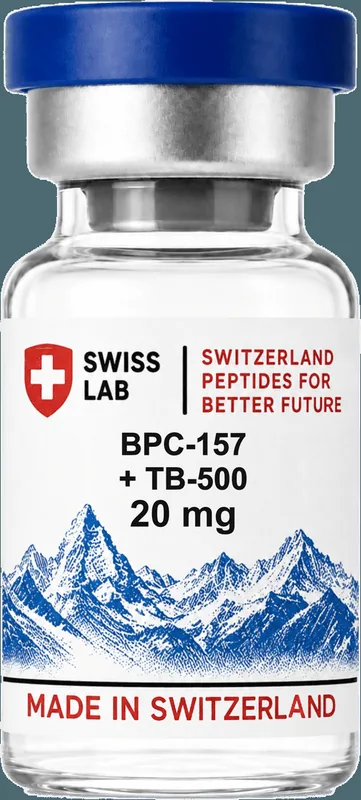
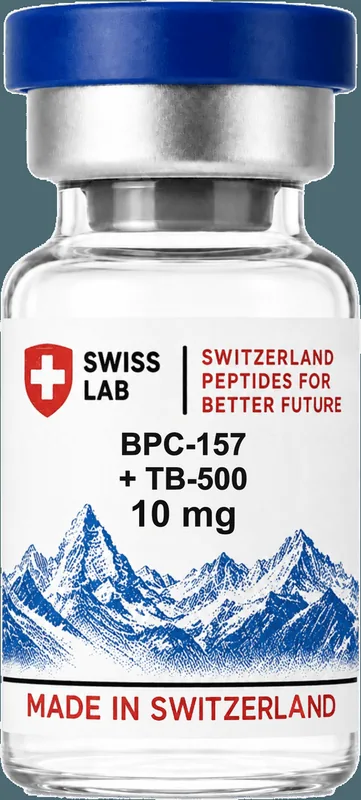
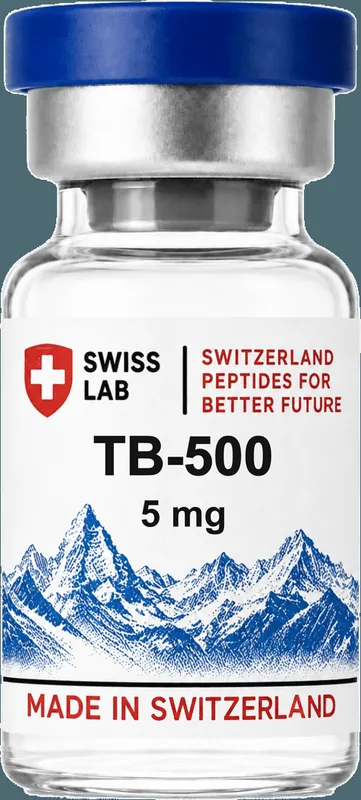
All analytical monographs and chemical data are published strictly for in-vitro laboratory research and scientific reference. Reagents must be handled by qualified personnel wearing appropriate PPE. Not for human or veterinary use.