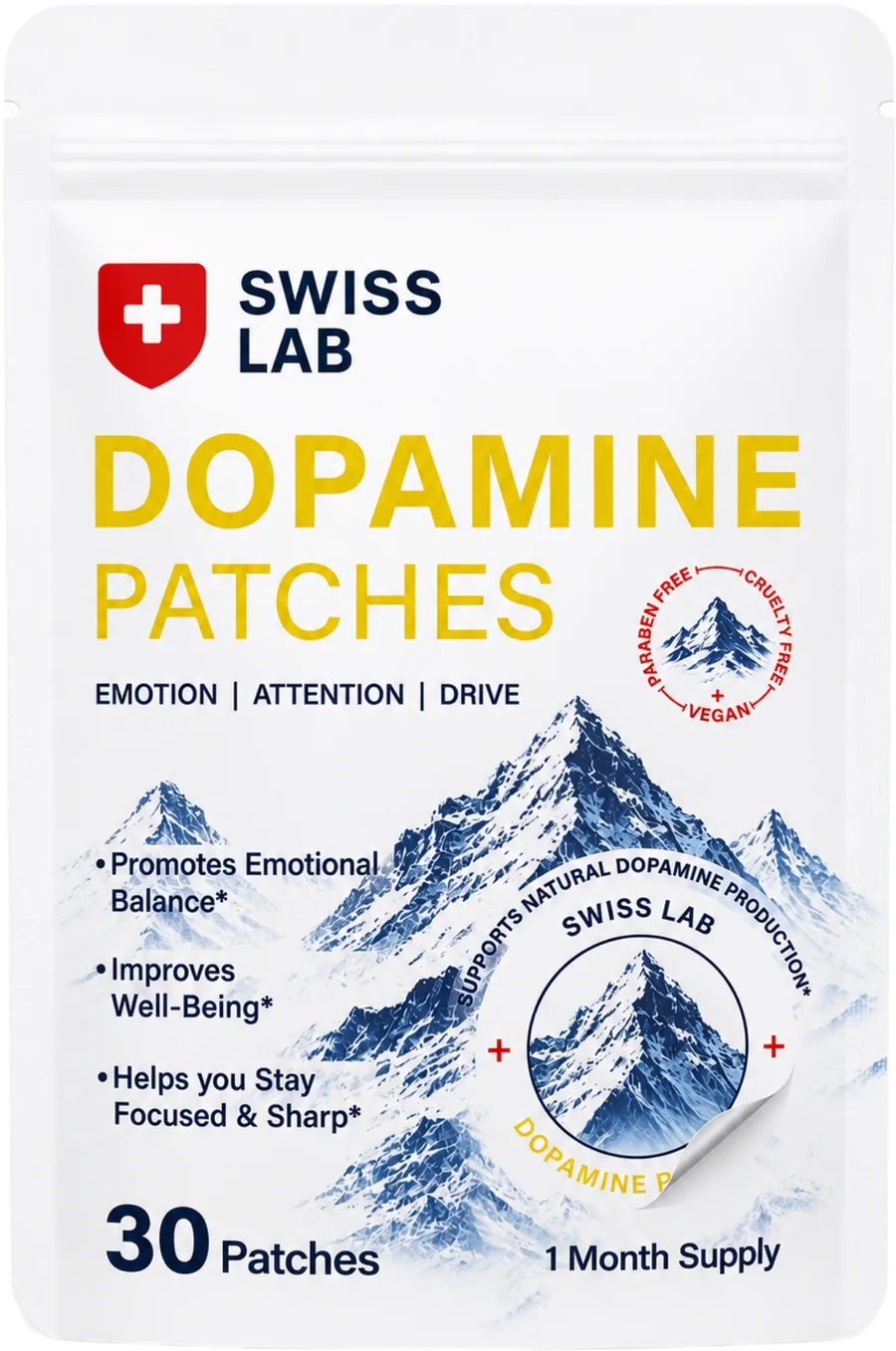
Catecholamine Precursor Patches
Standardized acrylate-hydrogel matrix formulation designed for transdermal delivery kinetics of aromatic amino acid precursors (L-Tyrosine and botanical L-DOPA) paired with enzymatic aromatic L-amino acid decarboxylase cofactors (Vitamin B6 / P-5-P and Vitamin B12) and salidroside/rosavin-standardized Rhodiola extract.
Matrix Active Constituents
- L-DOPA (Standardized Mucuna Pruriens)
- L-Tyrosine
- Rhodiola Rosea (3% Rosavins)
- Vitamin B6 (P-5-P) & B12
30 sealed matrix patches / pack
L-DOPA 197.19 Da / L-Tyrosine 181.19 Da
Light-barrier laminated foil pouch
HPLC-ECD / HPLC-UV catecholamine quantitation
Permeation & Diffusion Research Scope
Supports comparative permeation studies of zwitterionic aromatic amino acids (L-DOPA, L-Tyrosine) and cofactor co-transport across synthetic or ex-vivo membranes without first-pass gastrointestinal degradation.
Matrix Architecture: Acrylate-hydrogel transdermal matrix (8–10 hour release)
Laboratory Handling & Storage Protocol
Because catechol rings in L-DOPA oxidize rapidly under alkaline pH and UV light, maintain receptor media at mildly acidic-to-neutral pH (with optional antioxidant stabilizer such as 0.1% ascorbic acid in analytical collection vials) and shield samples from light.
Storage Requirement: Store in original sealed foil pouch at 15°C–25°C away from direct light.
Catecholamine Precursor Patches — Technical Questions
Why are pyridoxal-5-phosphate (B6) and cobalamin (B12) included in the precursor matrix?
Pyridoxal-5-phosphate acts as the obligate coenzyme for aromatic L-amino acid decarboxylase (AADC) in catecholamine biosynthesis models, enabling co-permeation and multi-analyte release profiling.
How should receptor-fluid samples be stabilized prior to HPLC analysis of L-DOPA?
Acidify collected aliquots immediately (e.g., dilute 1:1 with 0.1 M perchloric acid or 0.1% formic acid) and keep at 4°C to prevent autoxidation of L-DOPA into dopaquinone.