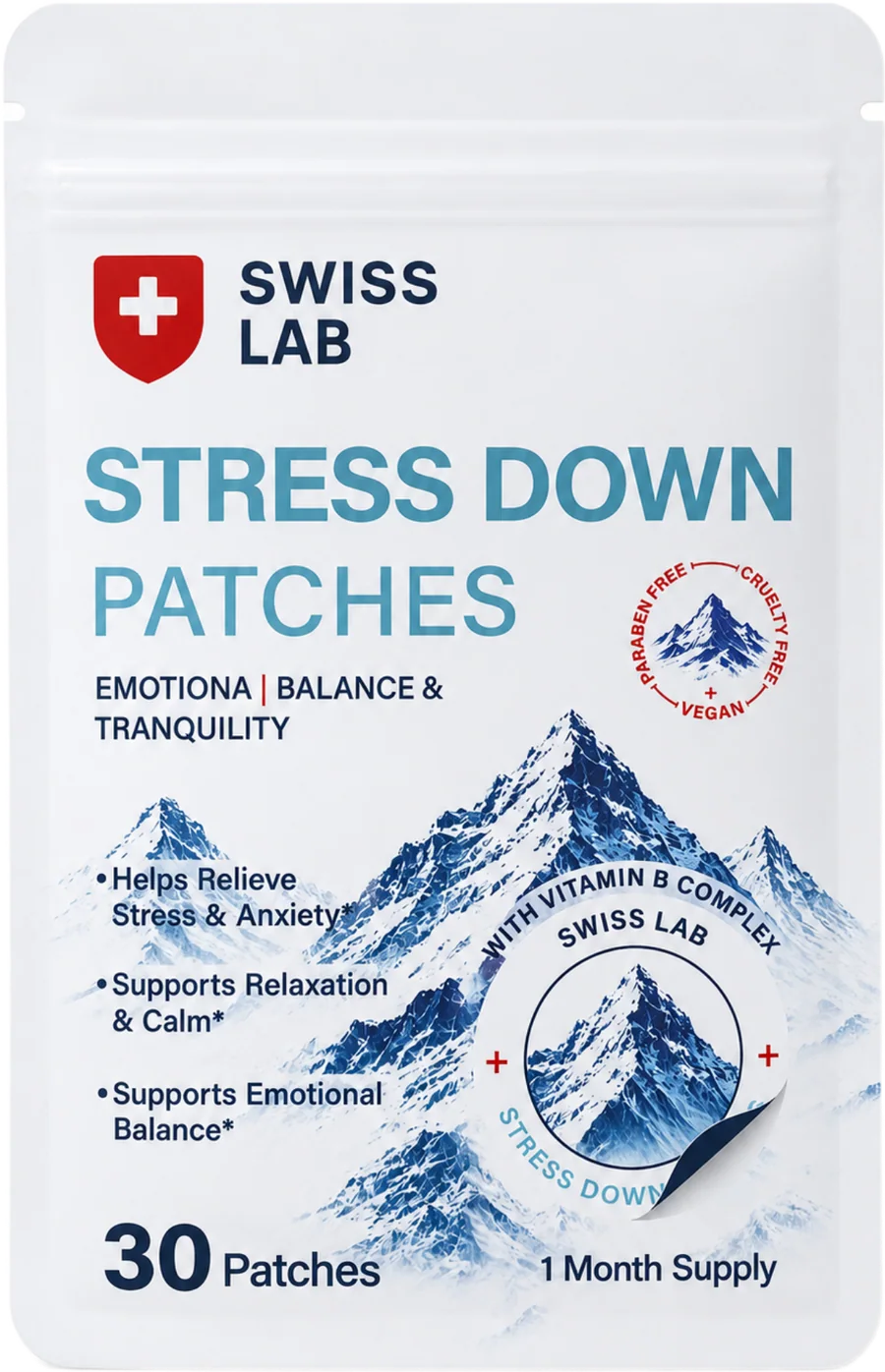
GABAergic & Botanical Matrix Patches
Sustained-release diffusion matrix integrating inhibitory amino acid neurotransmitter GABA (MW 103.12 Da), L-Theanine (MW 174.20 Da), withanolide-standardized Ashwagandha root extract (KSM-66, 5% withanolides), chelated Magnesium Glycinate, and indoleamine Melatonin (MW 232.28 Da) for extended overnight permeation kinetics.
Matrix Active Constituents
- Ashwagandha KSM-66 (5% Withanolides)
- GABA (γ-Aminobutyric Acid)
- L-Theanine
- Magnesium Glycinate
- Melatonin
30 sustained-release patches / pack
GABA 103.1 Da / L-Theanine 174.2 Da / Melatonin 232.3 Da
Standardized 5% Withanolides (HPLC)
Amber/foil barrier protecting indoleamine Melatonin
Permeation & Diffusion Research Scope
Utilized in controlled-release formulation testing to compare simultaneous passive diffusion of small hydrophilic zwitterions (GABA, L-Theanine), amphiphilic indoleamines (Melatonin), and steroidal lactones (withanolides).
Matrix Architecture: Sustained-release transdermal adhesive matrix (8–12 hour profile)
Laboratory Handling & Storage Protocol
Mount onto equilibrated diffusion cells under dimmed lighting to prevent photochemical cleavage of Melatonin. Quantify Melatonin via LC-MS/MS or fluorescence detection (Ex 285 nm / Em 345 nm) and amino acids via pre-column OPA derivatization.
Storage Requirement: Store sealed at 15°C–25°C shielded from light and moisture.
GABAergic & Botanical Matrix Patches — Technical Questions
Why does Melatonin permeate transdermal matrices differently than GABA or L-Theanine?
Melatonin is a low-MW (232.28 Da) neutral amphiphilic molecule (logP ~1.2) that partitions readily across lipid membranes, whereas GABA and L-Theanine are polar zwitterions requiring sustained hydrogel hydration to drive steady flux.
How long does the sustained-release adhesive matrix remain stable after opening the pouch?
Reseal the zip-lock foil barrier after each patch removal and consume remaining units within 60 days to preserve adhesive tack and prevent moisture loss.